Medical software designed from the ground up
We design and build in line with the requirements of the MDR, IEC 62304 and ISO 13485. We specialize in SaMD, where the software itself is a medical device, and SiMD, where the software is part of such a device.
Compliance is built alongside the code
In medical software, we distinguish two areas of safety and security. Safety means protecting the patient from harm caused by the product, while security covers protecting data and systems from cyber threats.
In a medical product, the highest costs appear when compliance, risk analysis and documentation enter the project at the end of the work. That means costly changes to the project.
Then architectural decisions have to be reversed and evidence that should have been produced along the way has to be reconstructed.
One team combining technical, quality and regulatory expertise
UX research and discovery
We learn the clinical workflow and the moment when the system should support a decision or the treatment process.
Medical software development
We design and build software that meets the strict requirements for SaMD / SiMD devices.
Quality management
Development records are created as we go, so during an audit nobody has to reconstruct them from the team's memory.
Regulatory affairs
We break down MDR and IEC 62304 requirements into technical design decisions.
Risk management
We run ISO 14971 risk analysis together with the architecture. A change in the code goes straight into the register.
Data protection & cybersecurity
We run patient safety and system security as two completely separate streams.
Maintenance and surveillance (PMS)
Once the device is on the market, we provide support and run active safety surveillance.
Cloud
We sell and configure infrastructure that meets legal requirements. As an AWS and Scaleway reseller, we keep costs optimized, and we will adapt the code to any provider you choose.
AI and small models
We use different models and adapt them to the project. We build control over the output into the process.
Support & maintenance
We maintain and develop the product after launch, according to the agreed support level (SLA).
We start by understanding the clinical context, then design the solution
We learn the needs and daily practice
We analyze how medical staff work and what patients need. We establish in which situations the software should support decisions or the course of care.
We design with requirements and risk in mind
We take medical software requirements and risk analysis into account as early as the architecture design. We assess every technical decision for its impact on safety and the product documentation.
We develop documentation alongside the product
We treat documentation as part of the product. We update requirements and risk analysis as the code changes, so the history of decisions doesn't have to be reconstructed after the work is done.
Clear division of responsibility before conformity assessment
We design and document in line with the requirements of ISO 13485, the MDR and IEC 62304. These requirements cover quality management, medical devices and the medical software life cycle.
We prepare the technical and documentation basis for the audit. As the manufacturer, you are responsible for the conformity assessment of the device and the certification of the quality management system.
Digital products for healthcare
Explore our projects for patients, medical teams and organizations responsible for healthcare.
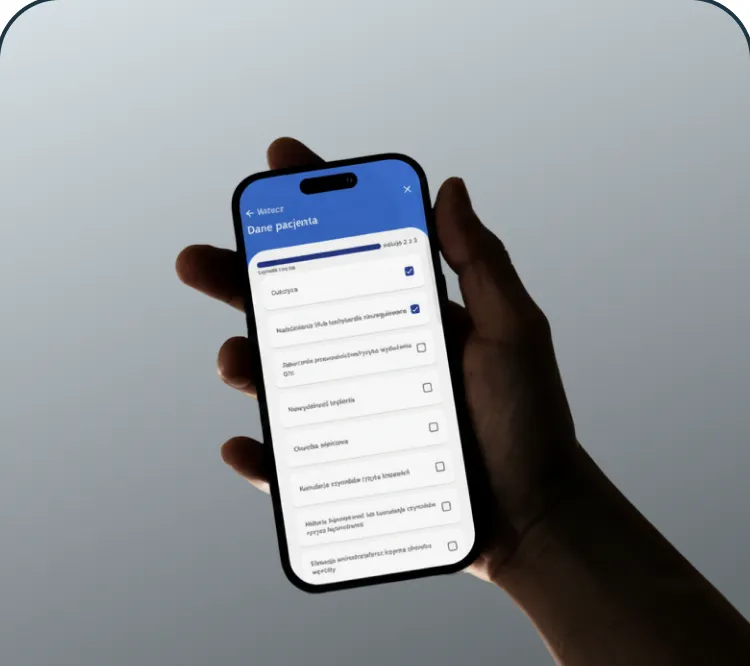 Mental health education app: Diagnozuj i LeczTogether with Angelini Pharma, we created the “Diagnozuj i Lecz” (Diagnose and Treat) app. It supports doctors and people recognizing early symptoms of depression. The main goal of the project is to raise awareness of mental health.
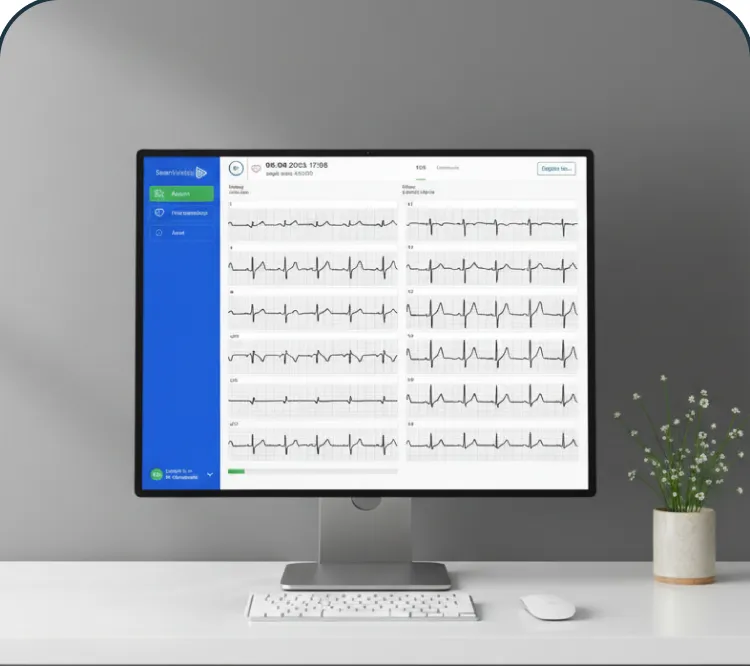 ECG mobile app for SmartMedicsSmartMedics is an innovative app that integrates with ECG devices. It helps doctors diagnose and monitor patients in real time.
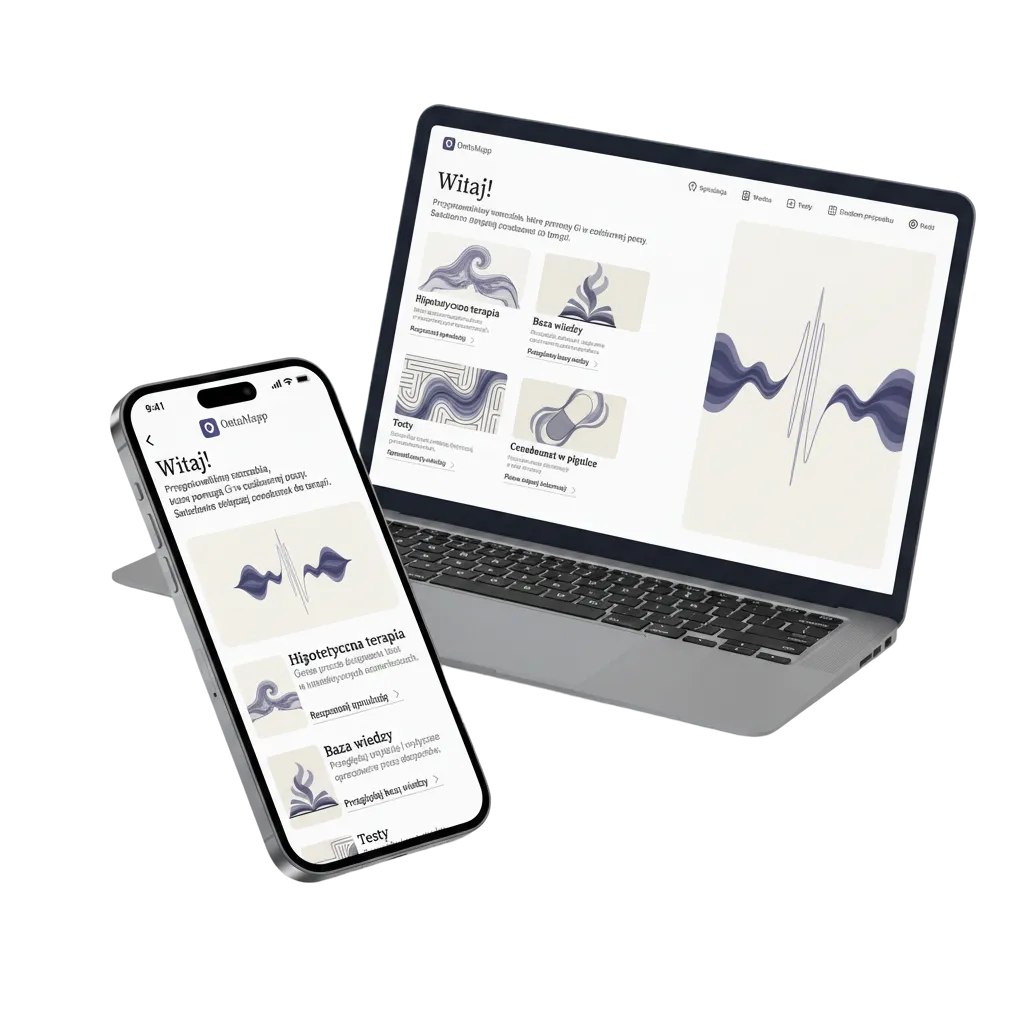 Education platform for neurologists treating drug-resistant epilepsyWe designed a platform that helps neurologists make decisions about anti-epileptic therapy. The project had to bring medical knowledge, user experience and business requirements together in one tool.
- Mental health education app: Diagnozuj i LeczTogether with Angelini Pharma, we created the “Diagnozuj i Lecz” (Diagnose and Treat) app. It supports doctors and people recognizing early symptoms of depression. The main goal of the project is to raise awareness of mental health.
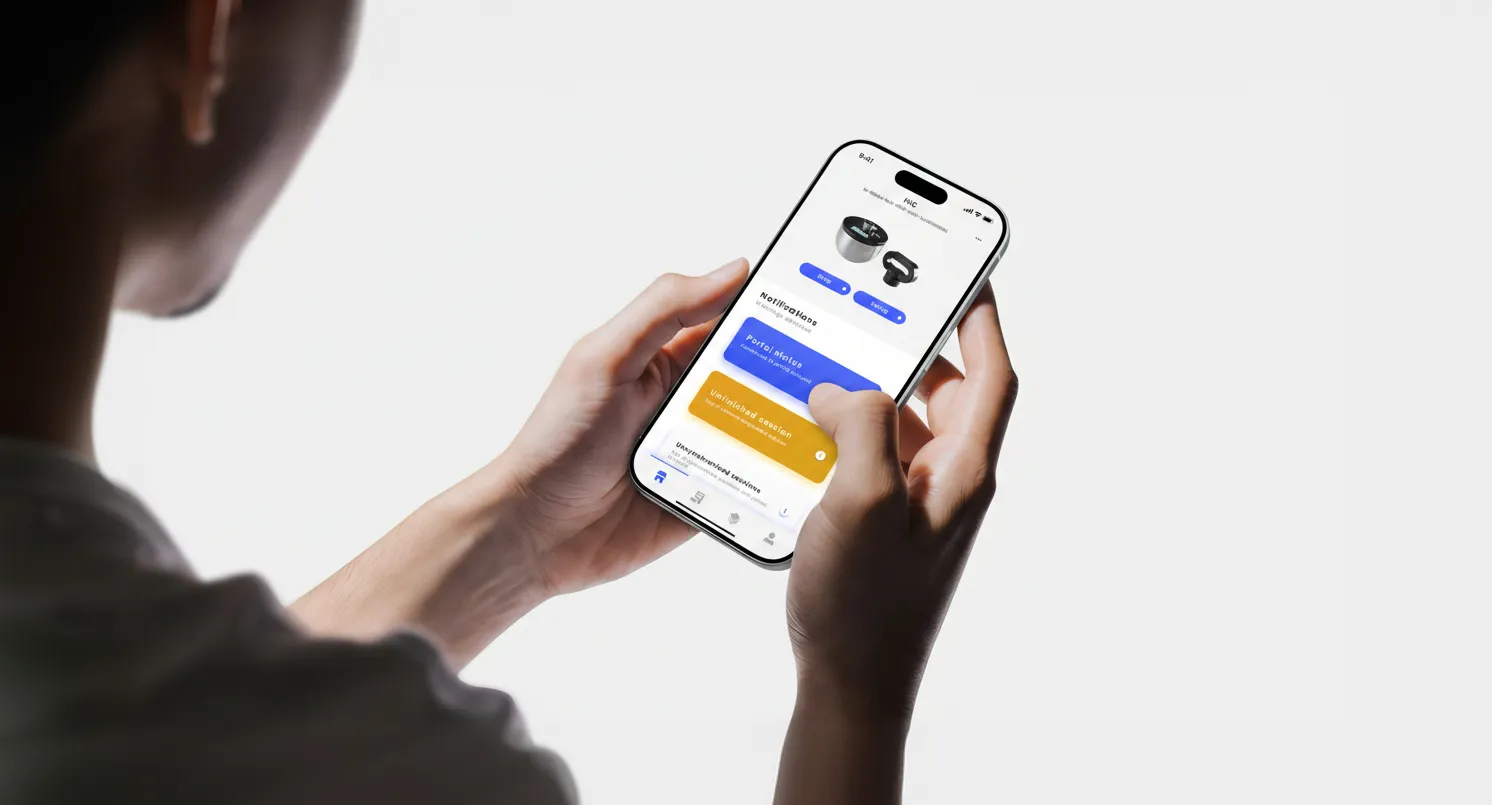 We built the product, then kept developing the appPlaygrounds & Pitches is a mobile and web platform for assessing the safety of sports surfaces. The app works with specialized measuring devices and supports inspectors in the field.
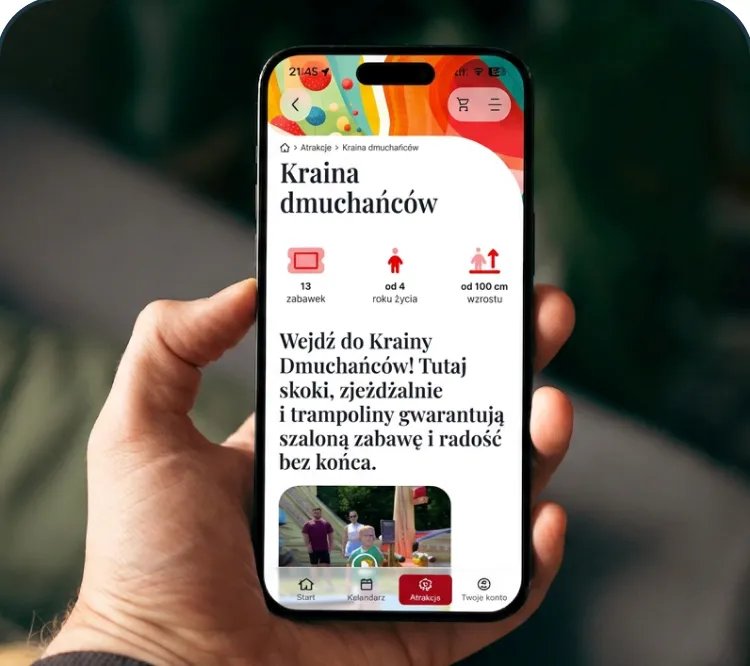 Mobile app for Julinek Amusement ParkJulinek is an amusement park with an established brand and a wide range of attractions. Our task was to design and build a mobile app that lets visitors plan their visits, buy tickets and make the most of the park with ease.
See how we work with companies of every size
Startup
Have an idea for a new product? We build a stable MVP on solid architecture, ready to grow and scale without friction.SME
Looking for a predictable IT partner? We build and scale advanced systems, keeping to your budget and fully compliant with standards at every stage.Enterprise
Running a complex business system? We build and maintain mission-critical solutions with demanding security and compliance requirements.








- Braster
- IVES System
- Julinek
- Zign Innovation
- Genexo
- Wirelessvalue
- Blesu
- Ludify
- Big Sur Analytics
- SmartMedics
- Angelini Pharma
- SoDA
Running a product and looking for a technology partner?
Let's talk about the risks, documentation and life cycle of your product before they become a constraint.
Frequently asked questions
We have gathered the most common questions to help you better understand our services and processes.
Is my app a medical device?
What decides is the intended purpose, not the technology. Under Rule 11 of Annex VIII to the MDR, software that provides information used to make diagnostic or therapeutic decisions is at least a class IIa device. When those decisions could lead to death or an irreversible deterioration of health, we are in class III. Purely informational apps, medication reminders and wellness tools stay outside the MDR. The line can be thin and often runs through a single sentence in a feature description. The MDCG 2019-11 guidance describes this qualification step by step, and every project we run starts with it.
Do you build medical software compliant with the MDR and IEC 62304?
Yes. We run the project according to the IEC 62304 life cycle: development plan, requirements specification, architecture, implementation, verification and validation. In parallel, we run risk management according to ISO 14971 and usability engineering according to IEC 62366-1. Documentation is written together with the code, so nobody has to reconstruct the project history at the end. The client remains the manufacturer of the device. Conformity assessment is carried out by a notified body, and for class I the manufacturer declares conformity on its own.
Class A, B or C under IEC 62304: what does it change in practice?
The class follows from the harm a software failure could cause. A means no injury is possible, B a non-serious injury, C death or serious injury. The difference in cost lies in the amount of evidence required. For A, a plan, requirements, high-level architecture and system tests are enough. B adds detailed design, unit-level verification, formal change management and full handling of SOUP components. C adds evidence for every element of the architecture. The class can be lowered for real through architectural segregation, but that work belongs in the design phase, not after the fact.
When do you deal with regulatory requirements in a medical project?
From day one. Risk analysis is not a document written just before the audit. It is an input to architectural decisions. The choice of database, handling a lost connection, how the app behaves with incomplete measurement data: all of it follows from specific identified hazards. Leaving this until testing means justifying, after the fact, decisions that were made for other reasons. It can be done, but it costs many times more and rarely holds up well in an audit.
How does patient safety differ from device cybersecurity?
Safety answers the question of what happens to the patient when the software works incorrectly. Security answers the question of who could cause that situation on purpose, and how. These are two separate processes: risk analysis according to ISO 14971 and threat analysis according to EN 81001-5-1 and MDCG 2019-16. We run them in parallel, with one mandatory point of contact. Every vulnerability that could result in harm to the patient goes back into the safety documentation as a separate hazard with its own control measure. When one team does both analyses in a single spreadsheet, both end up shallow.
Can a medical app be developed with agile methods?
Yes. IEC 62304 describes the required processes and their outputs, not a waterfall model. AAMI TIR45, a recognized guide to applying agile methods to medical software, confirms this. In practice, a sprint ends not only with a working increment but also with an updated trace: requirement, test case, verification result, impact assessment on the risk file. The backlog and the traceability matrix are the same information in two views. Documentation grows incrementally instead of being written in one rush at the end.
Is a medical app with an AI module also subject to the AI Act?
Yes, if the device goes through a conformity assessment involving a notified body. A device with an AI component in class IIa or higher qualifies as a high-risk system under Article 6(1) of the AI Act, because the MDR is listed in Annex I to that regulation. A self-certified class I app does not qualify through this route. The AI Act then adds requirements for training data quality, model documentation, event logging and human oversight. Some of them overlap with the MDR, so we build one set of documents mapped to both acts instead of two separate ones.
Will you take over development of an existing medical system ahead of an audit?
Yes, including products already on the market. We start with a gap assessment: what exists, what can be justified retrospectively and what has to be produced from scratch. A typical scenario is a working product with reasonable code and minimal documentation. We then reconstruct the requirements and architecture from the actual state, build the risk file, complete the verification and put change management in order. We work in parallel with feature development, so the product is not frozen for months. We also support implementing the procedures of a quality management system compliant with ISO 13485, which remains owned by the client.
What documentation do I receive at the end of a medical project?
A complete set of input material for the device's technical documentation:
- a software development plan and a configuration management plan,
- a requirements specification with full traceability,
- an architecture description and detailed design to the extent required by the safety class,
- a risk management file according to ISO 14971 with an assessment of residual risk,
- usability engineering documentation according to IEC 62366-1,
- a list of SOUP components with justification and risk assessment,
- an SBOM and cybersecurity documentation according to EN 81001-5-1,
- verification and validation plans and reports,
- instructions for use and labeling material,
- a report of unresolved anomalies with their assessment.
We adjust the scope to the device class and the software class. We hand the material over in a format that fits into your quality management system, not as a loose collection of files.
Who is responsible for the device once it is on the market?
Post-market surveillance is the manufacturer's obligation under Articles 83 to 86 of the MDR. Appotype provides its technical layer: monitoring vulnerabilities in libraries and dependencies, handling tickets under an agreed SLA, assessing the impact of every change on the technical documentation, and planning and releasing security updates. We deliver maintenance data in a form that feeds directly into your PMS reports and PSURs. We match response times to the risk class, because a critical vulnerability in a class IIb device requires a decision within hours, not days.