Digital tools for pharma that pass compliance review
We build educational platforms and clinical decision support tools. We have experience with regulated software, so we can tell when an app stops being an educational tool and becomes a medical device.
A pharma tool rests on two levels of credibility
These are really two separate areas. They are often confused, even though they require different skills.
The first condition is credibility of content for the user. A physician, researcher or medical affairs team will only reach for the tool if they trust its content and understand its clinical context.
The second area is the security of sensitive data and compliance with the organization's requirements, which must be met before the tool is approved for use.
One team develops the tool through every stage
UX research and discovery
We break the physician's decision process down into stages. Then we design tools that make the path to the goal easier and shorter.
Software development
We build apps for medical affairs teams and researchers. We have experience with educational tools and content workflows.
AI and data analysis
AI shortens the path to knowledge. With clinical content for medical professionals, we make sure every source is cited rigorously.
Data protection & cybersecurity
We decide how sensitive medical data is processed in the first sprints and secure the system right away.
Compliance and audit
We gather the compliance department's requirements at the start, because they decide whether the tool is finally approved.
Cloud
We sell and configure infrastructure that meets legal requirements. As an AWS and Scaleway reseller, we keep costs optimized, and we will adapt the code to any provider you choose.
Support & maintenance
After launch, we regularly update content and features together with your experts, under an SLA.
Quality management
We keep records so that your internal quality department can take them over without costly reconstruction of the history.
Regulatory affairs
We organize the guidelines and clearly show the point at which a digital educational tool becomes a SaMD / SiMD device.
We first analyze the clinical decisions the product should support
Users and workflow
We learn the tasks of medical staff and patients and the conditions in which they will use the system.
A solution that meets a real need
We design the tool around the actual workflow, not only around business assumptions. Technology should support that workflow.
Sensitive data security from the start
We plan how sensitive data is processed and secured from the first sprint. We treat an EU cloud, such as Scaleway, as one part of the answer to these requirements.
Digital products for modern pharma
We design educational platforms, clinical decision support tools and solutions for medical teams. See projects in this category.
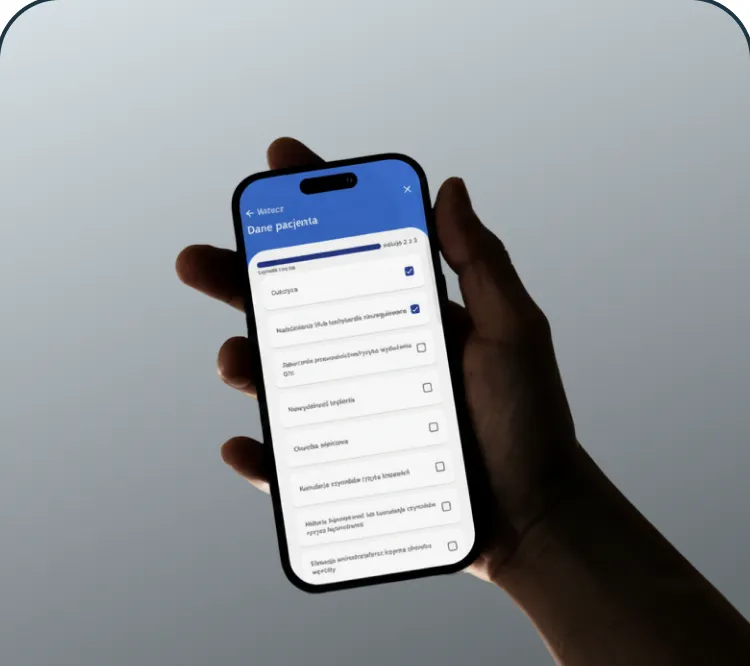 Mental health education app: Diagnozuj i LeczTogether with Angelini Pharma, we created the “Diagnozuj i Lecz” (Diagnose and Treat) app. It supports doctors and people recognizing early symptoms of depression. The main goal of the project is to raise awareness of mental health.
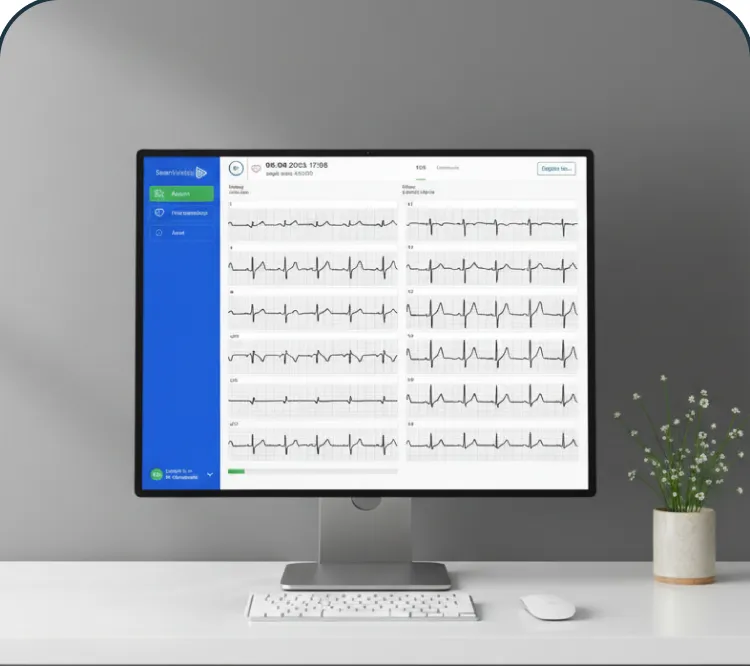 ECG mobile app for SmartMedicsSmartMedics is an innovative app that integrates with ECG devices. It helps doctors diagnose and monitor patients in real time.
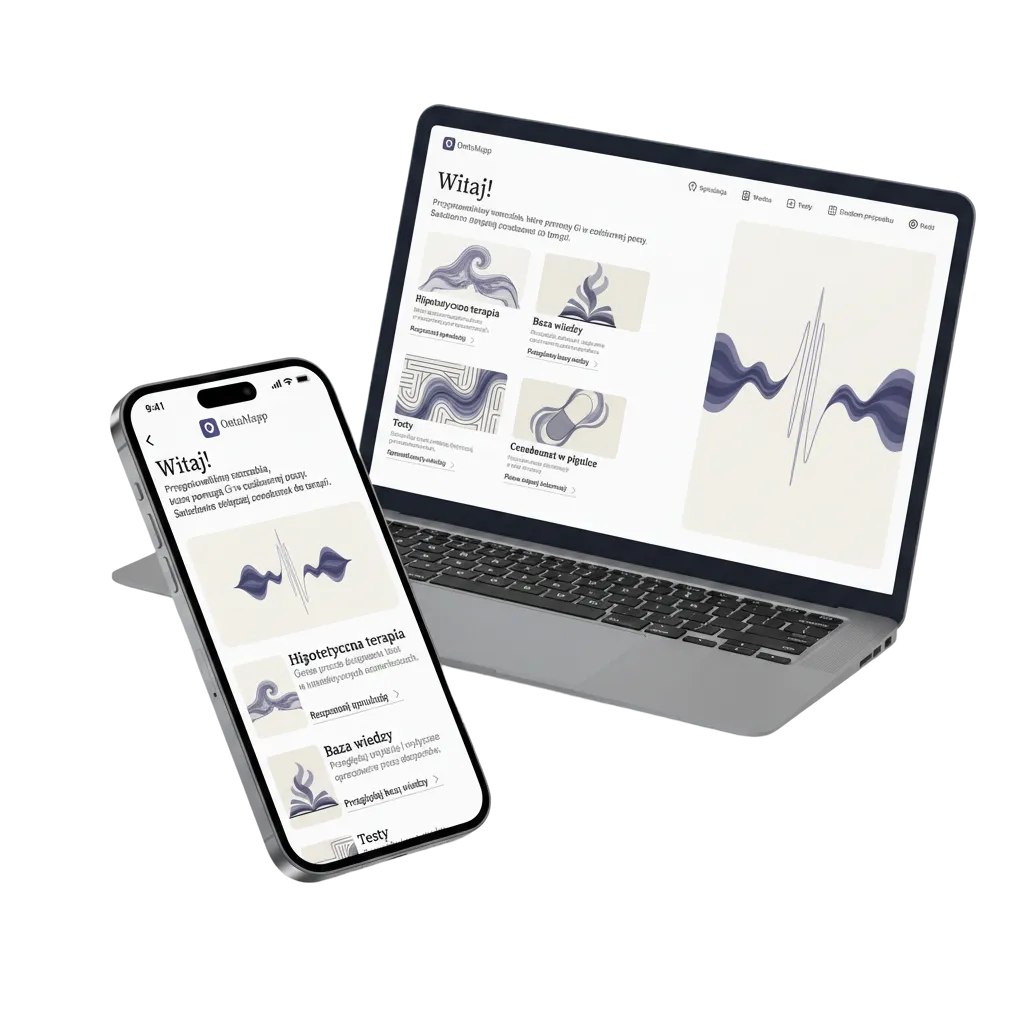 Education platform for neurologists treating drug-resistant epilepsyWe designed a platform that helps neurologists make decisions about anti-epileptic therapy. The project had to bring medical knowledge, user experience and business requirements together in one tool.
- Mental health education app: Diagnozuj i LeczTogether with Angelini Pharma, we created the “Diagnozuj i Lecz” (Diagnose and Treat) app. It supports doctors and people recognizing early symptoms of depression. The main goal of the project is to raise awareness of mental health.
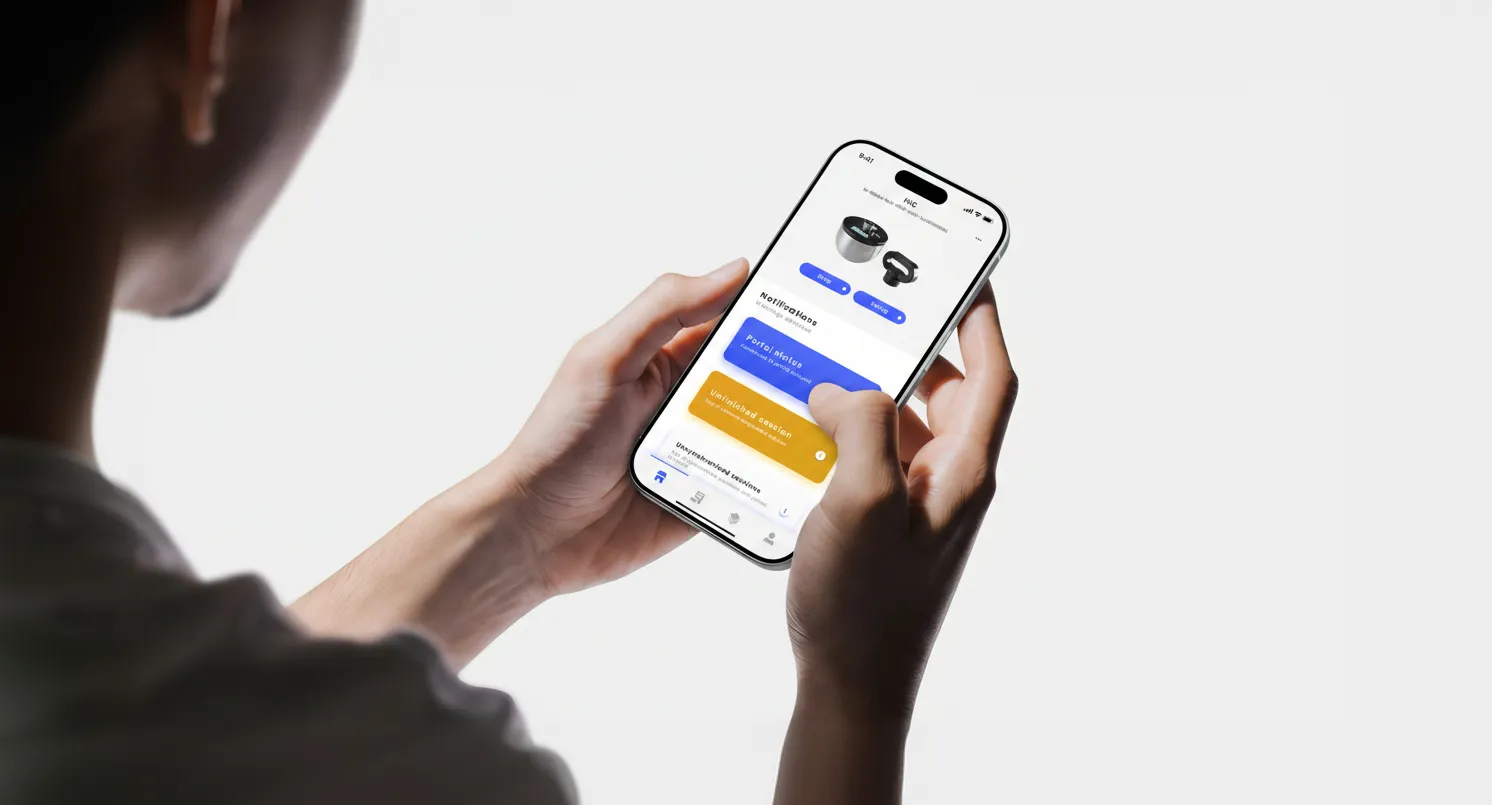 We built the product, then kept developing the appPlaygrounds & Pitches is a mobile and web platform for assessing the safety of sports surfaces. The app works with specialized measuring devices and supports inspectors in the field.
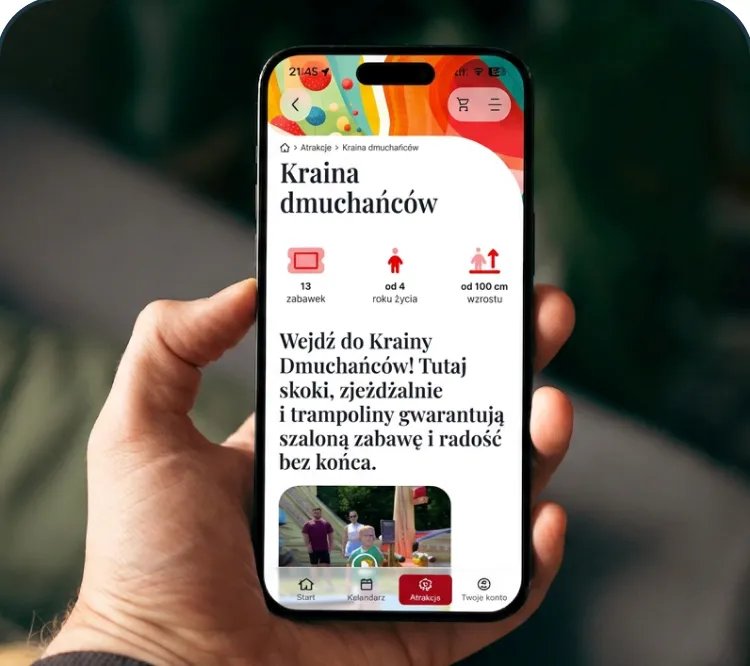 Mobile app for Julinek Amusement ParkJulinek is an amusement park with an established brand and a wide range of attractions. Our task was to design and build a mobile app that lets visitors plan their visits, buy tickets and make the most of the park with ease.
See how we work with companies of every size
Startup
Have an idea for a new product? We build a stable MVP on solid architecture, ready to grow and scale without friction.SME
Looking for a predictable IT partner? We build and scale advanced systems, keeping to your budget and fully compliant with standards at every stage.Enterprise
Running a complex business system? We build and maintain mission-critical solutions with demanding security and compliance requirements.












- Braster
- IVES System
- Julinek
- Zign Innovation
- Genexo
- Wirelessvalue
- Blesu
- Ludify
- Big Sur Analytics
- SmartMedics
- Angelini Pharma
- SoDA
Need to build a tool that has to pass medical and compliance review?
We know this process from the vendor's side. Let's talk about what needs to be settled before the first sprint, so you don't have to come back to it three times.
Frequently asked questions
We have gathered the most common questions to help you better understand our services and processes.
Can a patient app include the name of a prescription drug?
Not if the material is aimed at the general public. Pharmaceutical law prohibits advertising prescription medicinal products to patients. An app addressed to the general public therefore has to work at the level of the disease, the active substance or educational content, without promotional elements. A tool aimed only at healthcare professionals is a different case: the permitted scope is wider, but it requires reliable verification of the user's credentials. This split has to be settled at the design stage, because it shapes the account model, the content and the entire permission architecture.
What happens when a user reports an adverse event in the app?
Every such report has to reach the marketing authorization holder's pharmacovigilance system, no matter where it was entered. This also applies to a text field in a contact form and a comment in a survey. We design a separate path for this: detecting the report, flagging it, forwarding it to the designated channel and keeping time-stamped proof of forwarding. Deadlines are short, and a missing path of this kind is one of the more common audit findings for patient apps.
Does the system require validation under Annex 11 and GAMP 5?
If it supports GxP processes, yes. Annex 11 to the EU GMP guidelines and the GAMP 5 approach define the scope of computerized system validation: supplier qualification, user requirements specification, IQ, OQ and PQ testing, change control, an audit trail and data management in line with ALCOA+ principles. We scale the scope to the GxP risk assessment, so a reporting tool and a system handling registration data get different levels of evidence. We prepare the documentation in a format your quality department accepts.
Will the tool hold up with physicians and the compliance department?
These are two different tests, and the tool has to pass both. A physician judges whether the tool fits their decision path and does not add work. Compliance judges whether sensitive data is protected, whether documentation exists and whether it can be defended in an audit. Conflicts between these requirements appear early, usually around login and the scope of collected data. We address them at the architecture stage, because later every change costs on both fronts at once.
How do you ensure the clinical credibility of a solution?
The starting point is the physician's decision path, not the app screen. The discovery phase is for studying the work environment and the user's real constraints, including how much time they have for a single interaction. In past projects, we verified content with the client's scientific board and ran usability tests with physicians. The best visual design loses its point with a single factual error, so we treat correct content as an acceptance criterion for a task, not as a comment to fix after launch.
Do you work directly with our medical experts?
Yes, and it is usually a condition for the project to succeed. The system logic is based on the knowledge of the client's scientific board. We consult the information flow with the physicians and researchers assigned to the project, and the way critical data is presented is reviewed by them before release. We also agree on a clear procedure: who approves medical content, how quickly, and what happens when the experts disagree. Without it, the MLR process can stall a project for weeks.
How do you protect sensitive patient and facility data?
Access control, encryption and data minimization are planned together with the infrastructure, not after the first audit. Health data belongs to the special categories under Article 9 of the GDPR, which translates into requirements for retention, accountability and pseudonymization. By default, we design the app to store the minimum needed for its features to work, not everything that can be collected. The finished solution comes with documentation of technical and organizational measures in the format used by internal audit teams.
Will our data stay in a European cloud?
Yes. Appotype is a reseller of Scaleway, a French cloud provider, and by default we propose hosting in this model, with data in data centers within the EU. We also work on infrastructure chosen by the client, including on-premise. The client remains the data controller, and we act as a processor under a data processing agreement. You also receive a ready vendor documentation package that usually settles the legal department's questions without another round of correspondence.
When do you use AI in tools for the pharmaceutical industry?
When the model adds measurable value and its output can be checked. We use language models to speed up literature reviews, organize documentation and run preliminary analysis of results. We do not use them where the model's answer would reach the user as medical content without verification. Every use has defined limits, a human checkpoint and a procedure for wrong answers. We advise against deployments driven only by the board's expectations of the technology, usually at the first meeting.