Systems you can rely on when the stakes are high
We design and build reliable solutions for industry, infrastructure and PropTech. First we check whether the problem can be solved, then we develop the system in a real environment.
Check the direction before you invest in delivery
In complex technical projects, an investment decision requires checking whether the solution is feasible.
Our advantage is stepping into the design process and asking the key questions. What is the main business need? Can this be done at all? We start by checking the feasibility of the task on real data.
Only once the hypothesis is confirmed do we build the system. The prototype we develop is ready for integration, scaling and further maintenance. The reliability you need comes from the way we work on the product.
We start with proof of feasibility, then scale the system
Discovery and risk analysis
We narrow the problem down to questions of feasibility. We learn how people work and their operational load in the target environment.
Prototypes and PoC
We build the proof of feasibility on a slice of your own data. You check the direction before a large build.
Web and IoT apps
We connect software, sensors and operational data, taking into account the limits of edge devices.
AI and automation
We use AI to reduce repetitive work. When one hundred percent precision matters, we design a deterministic process.
System integrations
We connect your ERP and measurement equipment to the new system without costly operational downtime.
Cybersecurity
We design the threat model into the architecture. The private key stays securely on the device.
Cloud
We sell and configure infrastructure that meets legal requirements. As an AWS and Scaleway reseller, we keep costs optimized, and we will adapt the code to any provider you choose.
Maintenance and development
After launch, we take responsibility for monitoring, updates and development under a strict SLA.
We reduce risk before building the system
We start by establishing what could decide the success of the project. We want to be sure the investment decision rests on evidence you can verify yourself. We work in three steps.
Defining risks and questions
We identify the key risks and the questions the project must answer.
PoC on real data
We build a Proof of Concept or prototype that quickly tests assumptions in conditions close to the target ones.
Production system ready for scaling
If the solution works, you already have a solid foundation. From there, we develop the existing system so it is ready for integration, scaling and maintenance.
Hard problems we have solved successfully
Before we started building, we had to confirm that the chosen direction had a chance of working. Explore our projects and see how we resolved the key unknowns.
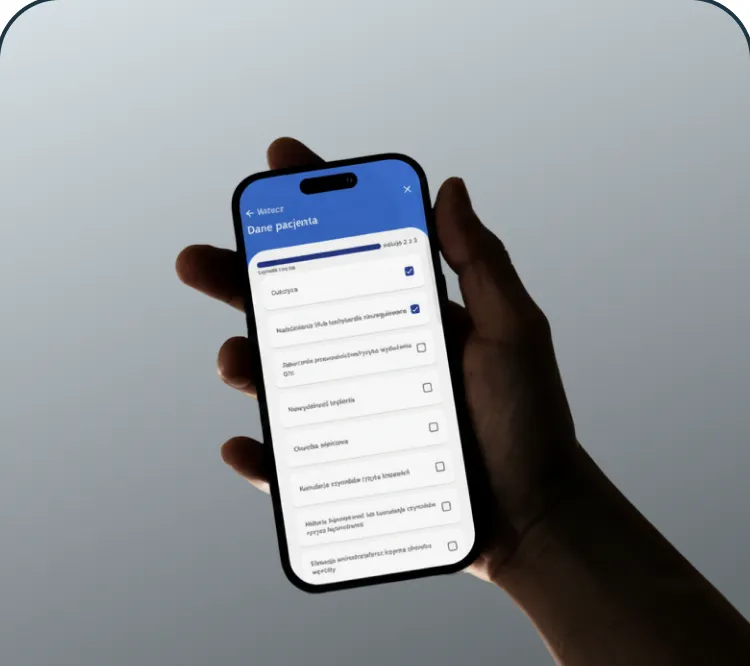 Mental health education app: Diagnozuj i LeczTogether with Angelini Pharma, we created the “Diagnozuj i Lecz” (Diagnose and Treat) app. It supports doctors and people recognizing early symptoms of depression. The main goal of the project is to raise awareness of mental health.
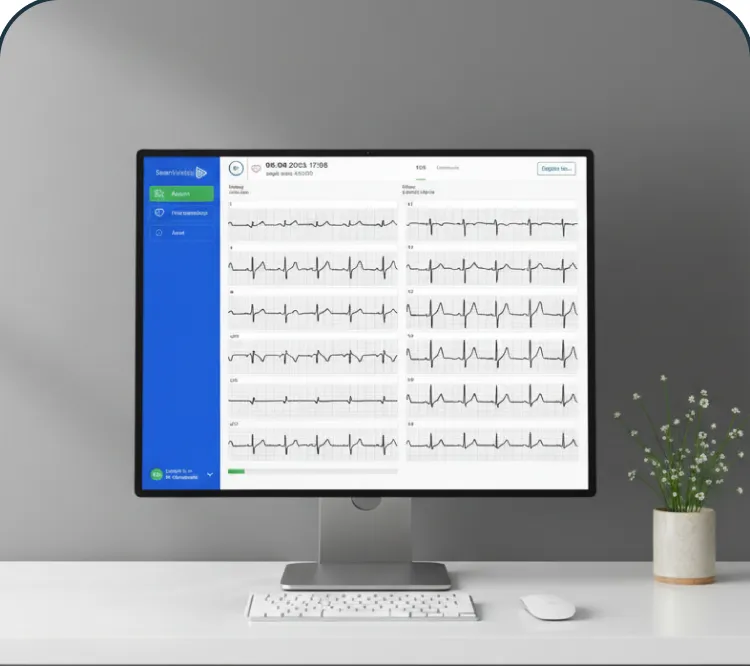 ECG mobile app for SmartMedicsSmartMedics is an innovative app that integrates with ECG devices. It helps doctors diagnose and monitor patients in real time.
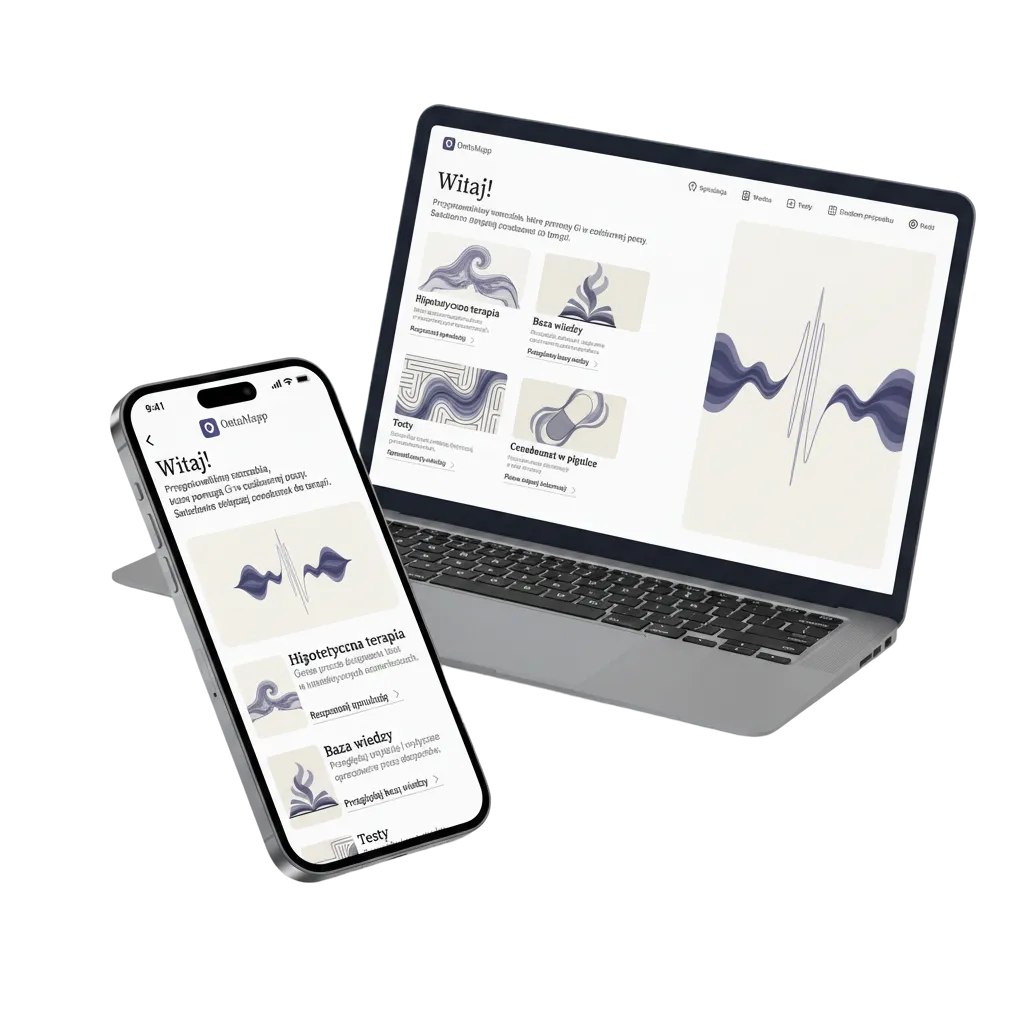 Education platform for neurologists treating drug-resistant epilepsyWe designed a platform that helps neurologists make decisions about anti-epileptic therapy. The project had to bring medical knowledge, user experience and business requirements together in one tool.
- Mental health education app: Diagnozuj i LeczTogether with Angelini Pharma, we created the “Diagnozuj i Lecz” (Diagnose and Treat) app. It supports doctors and people recognizing early symptoms of depression. The main goal of the project is to raise awareness of mental health.
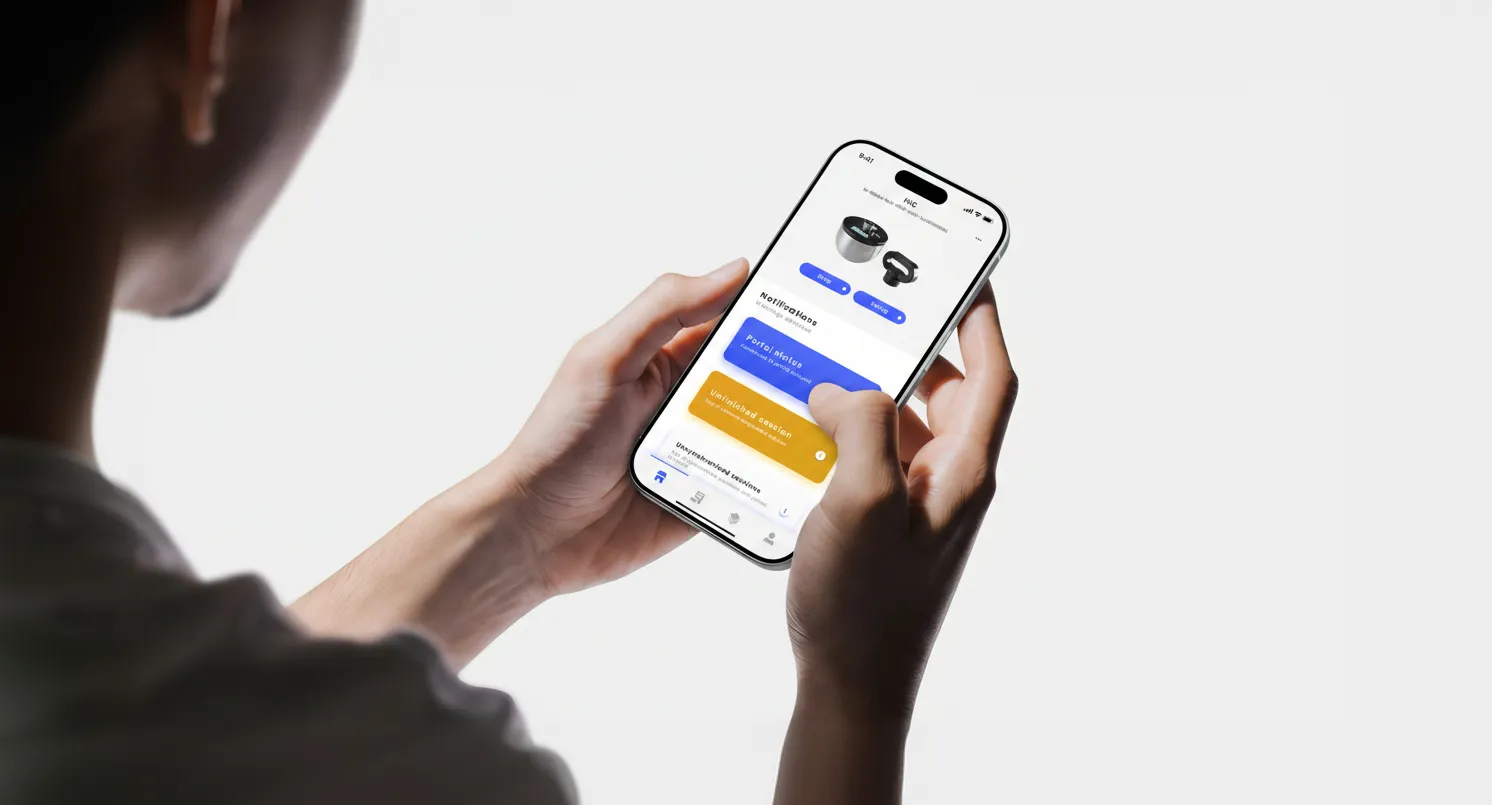 We built the product, then kept developing the appPlaygrounds & Pitches is a mobile and web platform for assessing the safety of sports surfaces. The app works with specialized measuring devices and supports inspectors in the field.
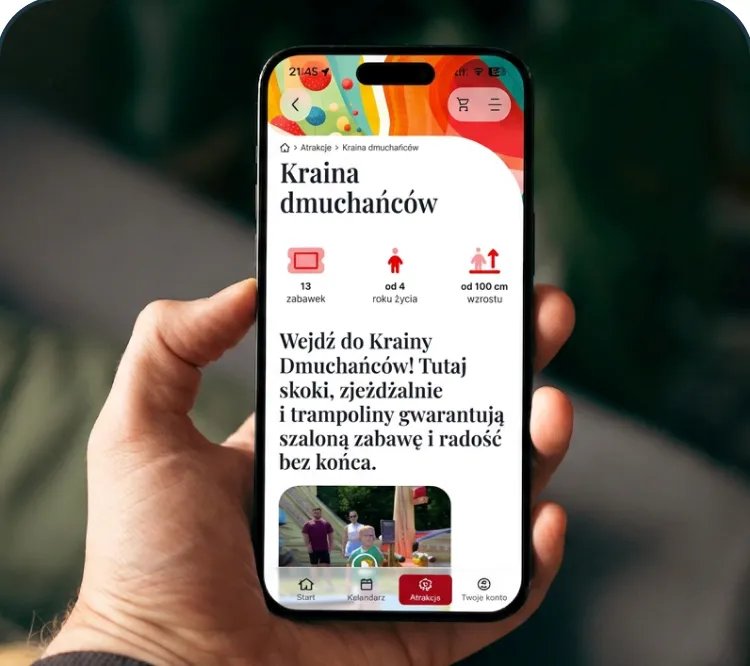 Mobile app for Julinek Amusement ParkJulinek is an amusement park with an established brand and a wide range of attractions. Our task was to design and build a mobile app that lets visitors plan their visits, buy tickets and make the most of the park with ease.
See how we work with companies of every size
Startup
Have an idea for a new product? We build a stable MVP on solid architecture, ready to grow and scale without friction.SME
Looking for a predictable IT partner? We build and scale advanced systems, keeping to your budget and fully compliant with standards at every stage.Enterprise
Running a complex business system? We build and maintain mission-critical solutions with demanding security and compliance requirements.












- Braster
- IVES System
- Julinek
- Zign Innovation
- Genexo
- Wirelessvalue
- Blesu
- Ludify
- Big Sur Analytics
- SmartMedics
- Angelini Pharma
- SoDA
Facing a problem nobody has solved before?
Tell us about the problem you want to solve. We will start with the biggest unknowns and plan a feasibility test that helps you decide on further investment.
Frequently asked questions
We have gathered the most common questions to help you better understand our services and processes.
How do you verify whether a hard technical problem can be solved?
We start by naming the biggest risk, the assumption that would invalidate the entire project if it proved false. Then we build a Proof of Concept on a slice of real data, not synthetic data. The PoC has one job: to settle that specific question within a set time and budget. The result is an answer, even when it is “this architecture can't do it.” That answer after six weeks is much cheaper than the same answer after a year of implementation.
How long does a Proof of Concept take and how much does it cost?
From one to four weeks, with a budget of 10,000 to 100,000 PLN net. Where a specific project falls in this range depends on three things: access to data, the number of integrations the test has to touch to be meaningful, and how many people need to work in parallel. Testing one assumption on data you already have sits near the lower end. Verification that involves production systems and hardware reaches the upper end. We close the scope in a short session that ends with one sentence: what exactly the PoC is meant to prove or disprove. Without that sentence, a PoC turns into a small project with no end. The cost is known up front and does not grow along the way.
Will you integrate the solution with our devices and OT systems?
Yes. We connect the hardware layer, software and databases into one environment, taking into account the protocols used on the industrial side, such as MQTT, Modbus or OPC UA. The architecture accounts for link bandwidth, the limits of edge devices and the fact that the OT network is usually, and should remain, separated from the office network. So we design controlled points of contact instead of opening traffic between segments.
Will the system stay stable in the field without network coverage?
Yes, with an offline-first architecture. Our portfolio includes apps that store operations locally on the device and sync in the background once the connection is back. The hard part is not storing data offline but resolving conflicts: what happens when two people changed the same record while out of coverage. We agree on the resolution rule with the client at the design stage, because it is a business decision, not a technical one. Operations then run regardless of network coverage quality.
Will a successful PoC be developed to production scale?
Yes, and we plan for it from the start. We treat PoC code as evidence, not as the foundation for production, so we deliberately rewrite parts of it. What we carry over is what matters most: the confirmed architecture, verified performance parameters and knowledge of where the bottlenecks are. Next comes the integration layer for further devices and ERP systems, and a staged rollout that does not stop operations.
Do NIS2 obligations apply to us?
It depends on your sector and size, but if they do, they translate directly into requirements for the software. They add supply chain risk management, event logging, access control, a business continuity plan and reporting obligations with short deadlines. In practice, this means specific features in the system: an audit log that cannot be modified, multi-factor authentication and the ability to restore the system state at the moment of an incident. We design them from the start, because adding an audit log to a finished system is one of the more expensive changes.
Who maintains the system after launch, and on what terms?
Maintenance is governed by an SLA, and we match the level to how critical the solution is. The Essential package covers support on business days, Extended a longer response window, and Full continuous monitoring. For systems that control a physical process, what matters is not only response time but also an agreed emergency procedure on the client's side: what the production shift does before we have time to respond. We agree on it together with the SLA, not after the first incident.